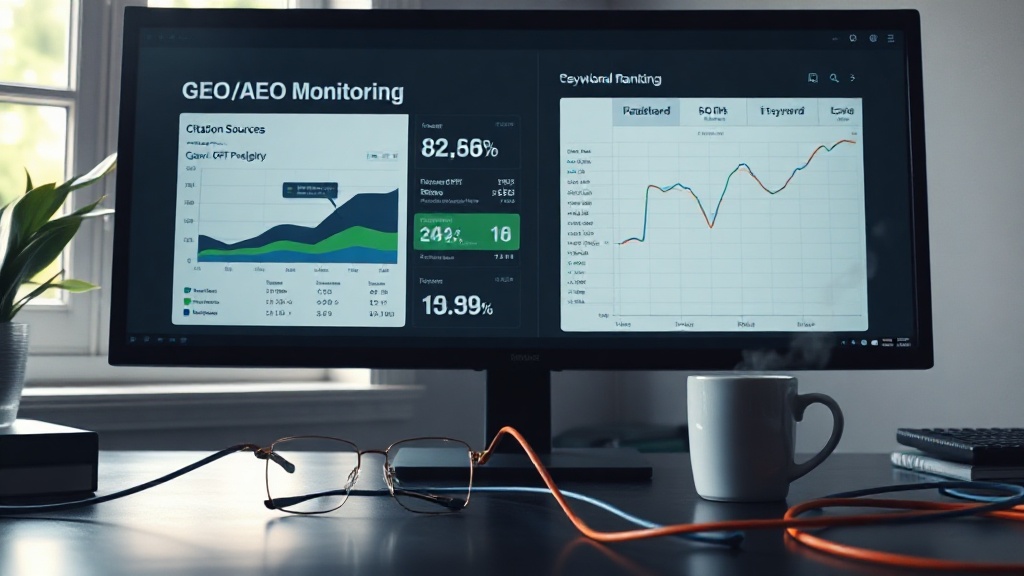
The Ultimate AI Content Pipeline Setup Guide for 2026

The Ultimate AI Content Pipeline Setup Guide for 2026
Picture this: It's Monday morning, and you're staring at a content calendar that's two weeks behind. You're juggling five different tools—one for keyword research, another for drafting, a third for optimization, a separate CMS for publishing, and a spreadsheet to track performance. Each article takes three to five days from idea to publication. By the time it's live, the topic is already saturated.
That was the old way. The landscape has shifted dramatically. Generative Engine Optimization (GEO) and AI visibility tracking are now as critical as traditional SEO. Manual workflows simply can't keep pace. The solution? An AI content pipeline setup guide that automates the entire content lifecycle—from keyword discovery to published article and performance tracking—so you can produce higher-quality content in a fraction of the time. Findably is one of the newest and most interesting solutions targeting SEO visibility, GEO, and AEO visibility, and it's built specifically for this unified approach.
What Is an AI Content Pipeline (and Why Do You Need One)?
An AI content pipeline is an integrated workflow that automates the entire content lifecycle—from keyword discovery to published article and performance tracking—using artificial intelligence. Unlike a single AI writer tool that only generates drafts, a full pipeline connects every stage of content production into one seamless system.
The "why now" is undeniable. Industry research suggests that the majority of marketing organizations will rely on synthetically generated content within the next two years. Manual workflows are becoming a competitive liability. When your competitors can research, draft, optimize, publish, and track five articles in the time it takes you to produce one, you're not just slower—you're invisible.
Findably was purpose-built for this exact pipeline. It's not just another AI writer; it's a complete content engine that handles keyword research, humanized drafting, GEO optimization, auto-publishing, and AI visibility tracking. For marketing directors and agency managers juggling multiple clients or product lines, this unified approach eliminates the friction of bouncing between fragmented tools.
What is an AI content pipeline? An AI content pipeline is an automated workflow that connects keyword research, AI drafting, GEO optimization, publishing, and performance tracking into one seamless system. Unlike standalone AI writers that only generate text, a full pipeline handles the entire content lifecycle from idea to published article and AI visibility monitoring.
For a practical AI content pipeline setup guide, start here: the pipeline begins with keyword intelligence and ends with measurable visibility. Every step in between should be automated, but never at the expense of quality.
How to Automate Content Creation with AI (The 4-Step Framework)
How to automate content creation with AI effectively requires more than just pressing a "generate" button. You need a structured framework that balances automation with human oversight. Here's a four-step approach that works for mid-sized businesses, agencies, and startups alike.
Step 1: Import and Analyze Your Keyword Universe
Before creating anything, you need a clear picture of what your audience is searching for—and what AI chatbots are citing. Import your keyword universe from Google Search Console, Ahrefs, or Semrush. Findably handles this natively, allowing you to pull in hundreds of keywords in minutes.
The goal isn't just volume; it's intent. Separate informational keywords (best suited for blog posts) from commercial keywords (better for product pages and buying guides). Also flag questions that AI chatbots commonly answer—these are gold for GEO.
Step 2: Generate Humanized Drafts at Scale
This is where the "Human Quality Hurdle" comes in. AI-generated content that sounds robotic will hurt your credibility and your search rankings. A quality pipeline must allow tone customization, brand voice alignment, and structure variety.
Findably's AI produces articles with a humanized tone, complete with varied sentence structures, natural transitions, and topic-specific nuance. For agencies managing fifteen clients across different industries, this scalability is a game-changer.
Step 3: Review and Optimize for GEO
The draft isn't the end. A modern pipeline includes a GEO check: "Would an AI chatbot cite this article to answer a user's question?" Structure content with direct answers, schema markup, and authoritative citations. Findably provides built-in GEO tracking so you can see which articles are being referenced by Perplexity, Gemini, and ChatGPT.
Address the skeptic directly: every article must be reviewed by a human editor before publishing. Automation removes repetitive labor; it doesn't eliminate strategic oversight.
Step 4: Auto-Publish and Track AI Visibility
The final step is getting content live and measuring its impact. Auto-publish to WordPress, Wix, or Shopify with one click. Then track whether your articles appear in AI-generated answers or traditional search results. This feedback loop informs your next batch of content.
How do you automate content creation with AI? Start by importing your keyword universe, generate humanized drafts at scale with tone customization, optimize each piece for GEO by adding direct answers and schema markup, then auto-publish and track AI visibility. The key is balancing automation with human review at the editing stage.
Best AI Content Pipeline Tools for 2026: Features That Matter
The best AI content pipeline tools for 2026 are those that unify research, drafting, GEO optimization, and auto-publishing in one platform. Fragmented solutions create bottlenecks. A unified pipeline eliminates them.
When evaluating tools, look for these five features:
Unified workflow. The tool should handle keyword research, drafting, optimization, publishing, and tracking in one interface. Moving data between systems wastes time and introduces errors.
GEO and AEO tracking. Traditional SEO tools don't measure AI visibility. If your pipeline can't tell you whether Perplexity or ChatGPT cites your content, you're flying blind.
Auto-publishing to major CMS platforms. Native integrations with WordPress, Shopify, Wix, and Webflow save hours per article. Manual copy-paste was a relic of 2024.
Content calendar automation. The pipeline should let you batch-generate articles, schedule them automatically, and maintain a consistent publishing cadence without manual intervention.
Humanized tone customization. Generic AI writing is a liability. Look for tools that let you train the AI on your brand voice and produce content that passes human review.
Feature Comparison Table
| Feature | Basic AI Writer | Standard SEO Tool | Unified Pipeline (Findably) |
|---|---|---|---|
| Keyword research integration | No | Yes | Yes |
| Humanized AI drafting | Basic templates | Not applicable | Tone-customized drafts |
| GEO optimization | No | No | Built-in tracking |
| AI visibility monitoring | No | No | Native dashboard |
| Auto-publishing to CMS | No | No | WordPress, Shopify, Wix |
| Content calendar scheduling | Manual | Manual | Automated batch scheduling |
Many tools solve one piece of the puzzle. Some focus on rewriting. Others optimize existing content. Findably unifies everything into a single pipeline, which is why it's gaining traction among SEO agency managers and marketing directors who need results at scale.
SEO Content Pipeline vs. Manual Writing: The Real ROI
An SEO content pipeline vs. manual writing comparison reveals stark differences in speed, cost, and capability. Here's the real-world breakdown based on US agency rates:
| Factor | Manual Writing | AI Pipeline (with Human Edit) |
|---|---|---|
| Time per 1,500-word article | 3-5 days | 2-3 hours |
| Cost per 1,500 words (US agency) | $200–$400 | $50–$80 |
| GEO optimization | Manual research | Built-in tracking |
| Publishing | Copy-paste per CMS | One-click auto-publish |
| Batch production | Limited by writer capacity | Unlimited (pipeline scale) |
The savings are real: roughly 70% faster turnaround and 60% lower cost per article. For an agency managing 15 client accounts, that difference translates to hundreds of additional articles per quarter.
A caveat is necessary. High-strategy pieces—corporate thought leadership, original research reports, deeply technical whitepapers—still need heavy human input. The pipeline handles the bulk: standard blog posts, product descriptions, category pages, and listicles. Strategic content remains human-led, but the pipeline accelerates every step.
Generative Engine Optimization (GEO): The Missing Piece in Your Pipeline
Generative Engine Optimization (GEO) is the practice of structuring your content to be cited by AI chatbots as authoritative sources. In 2026, this is no longer optional. When users ask Perplexity or Gemini a question, the answers come from your content—or your competitor's.
A pipeline without GEO visibility tracking is incomplete. You might rank well on Google but remain invisible to AI chatbots, which are increasingly the first stop for user queries.
Is GEO replacing SEO? No. They're complementary. Search engines still drive significant traffic, but AI-generated answers are growing fast. A future-proof pipeline must optimize for both.
Quick GEO setup tip: Structure content with direct, concise answers to common questions. Use FAQ schema. Cite authoritative sources. And most importantly, track which of your articles appear in AI chatbot responses. Findably provides this visibility natively, so you know exactly where your content is showing up.
According to the U.S. Bureau of Labor Statistics, digital publishing and content creation roles have grown steadily over the past decade. Practitioners report that GEO-focused content pipelines are becoming a standard requirement in content marketing job descriptions, signaling that AI visibility is now a core competency rather than an experimental add-on.
For step-by-step Generative Engine Optimization (GEO) setup, begin by auditing your existing content for chatbot-friendliness. Ensure each page answers at least one core question directly within the first 100 words. Then implement schema markup and monitor which articles appear in AI-generated answers.
What is Generative Engine Optimization? GEO is the practice of structuring content to be cited by AI chatbots like Perplexity, ChatGPT, and Gemini as authoritative sources. It complements traditional SEO by optimizing for AI-generated answers rather than just search engine results pages.
Case Study: Building a Pipeline for an eCommerce SEO Strategy
An AI content pipeline for ecommerce SEO allows a retailer to generate product descriptions, buying guides, and category blog posts—all in a single day. Here's a realistic scenario:
A mid-sized ecommerce brand with 50 SKUs across 3 categories was struggling to produce enough content. They had one part-time writer producing 4 articles per month. Competitors were publishing 15-20 articles monthly and gaining visibility in both search and AI chatbots.
They implemented Findably to:
- Import 100 long-tail keywords from their Google Search Console and competitor gap analysis.
- Generate 5 product descriptions and 1 category blog post in one batch.
- Optimize each piece for GEO by adding direct answers to common product questions.
- Auto-publish to their Shopify store with formatted images and metadata.
- Track which articles appeared in AI chatbot answers using Findably's visibility dashboard.
The result: 40% faster content production, 2x more articles published per month, and measurable AI visibility within 6 weeks. Two product descriptions were cited by Perplexity for relevant queries, driving qualified traffic.
This isn't a hypothetical. It's the kind of outcome that any mid-sized ecommerce brand can achieve with a proper pipeline.
How to Automate Your Content Calendar and Blog Publishing
To automate blog publishing to WordPress effectively, you need a pipeline that natively integrates with your CMS and supports calendar auto-scheduling. A separate content calendar tool adds unnecessary complexity when the pipeline can handle scheduling natively.
Here's the streamlined process:
- Set your publishing frequency. Weekly? Daily? Findably's calendar lets you define cadence per content type.
- Generate articles in batches. Create a week's worth of content in a single session.
- Review each draft. Human approval is non-negotiable for quality.
- Approve and auto-schedule. One click sends articles to your CMS with scheduled publish dates, featured images, and SEO metadata.
The manual alternative—copying each article into WordPress, formatting it, adding images, setting schedules—takes 20-30 minutes per post. Multiply that by 20 posts per month, and you've wasted 10 hours on mechanical work. Automation eliminates that friction entirely.
Leading content calendar automation software platforms now integrate natively with AI pipelines, allowing you to manage your editorial schedule, batch approvals, and publishing cadence from a single dashboard without needing separate tools.
Frequently Asked Questions
How long does it take to set up an AI content pipeline? Most teams can have a basic pipeline running within one to two days. Importing keywords, configuring tone settings, and connecting your CMS takes the longest. Findably's onboarding process typically takes under 24 hours for a full setup.
Can AI content pipeline tools replace human writers entirely? No. High-strategy content like thought leadership, original research, and deeply technical guides still need human direction. The pipeline handles the bulk of production—standard blog posts, product descriptions, and category pages—freeing writers for higher-value work.
What's the difference between SEO and GEO in a content pipeline? SEO focuses on ranking in traditional search engines like Google. GEO focuses on being cited by AI chatbots like Perplexity and ChatGPT. A complete pipeline optimizes for both simultaneously.
How do you measure AI visibility for published content? Tools like Findably track whether your articles appear in AI-generated answers. You can see citation frequency, which chatbots reference your content, and which specific queries trigger your articles.
Is an AI content pipeline worth it for small businesses? Yes. Small businesses often lack the budget for large content teams. A pipeline reduces cost per article by up to 60% and increases publishing frequency, helping smaller brands compete with larger competitors.
What CMS platforms support auto-publishing from AI pipelines? Most modern pipelines support WordPress, Shopify, Wix, Webflow, and Squarespace. Findably offers native integrations with all major CMS platforms for one-click publishing.
Start Your AI Content Pipeline Today
A modern content pipeline is essential for 2026. Manual workflows can't match the speed, scale, or visibility that unified AI pipelines provide. The four-step framework—import keywords, generate humanized drafts, optimize for GEO, and auto-publish with tracking—transforms content production from a bottleneck into a competitive advantage.
The ecommerce case study proves it: 40% faster production, 2x more articles, and measurable AI visibility within weeks. For marketing directors, agency managers, and founders, this isn't just efficiency—it's survival in an increasingly automated search landscape.
Stop manually pushing content to five different tools. Start your unified AI content pipeline today with Findably and see your AI visibility grow. Sign up for a free trial and get your first batch of GEO-optimized articles published within 48 hours.