How to Validate Your GEO Content for Local Businesses in 2026
How to Validate Your GEO Content for Local Businesses in 2026
GEO content validation for local businesses means ensuring your website content, Google Business Profile, and structured data are formatted and authoritative enough to get cited by generative AI search engines like ChatGPT, Gemini, and Perplexity. Here's the blunt truth: in 2026, if your content isn't GEO-validated, it might as well not exist for AI search engines.
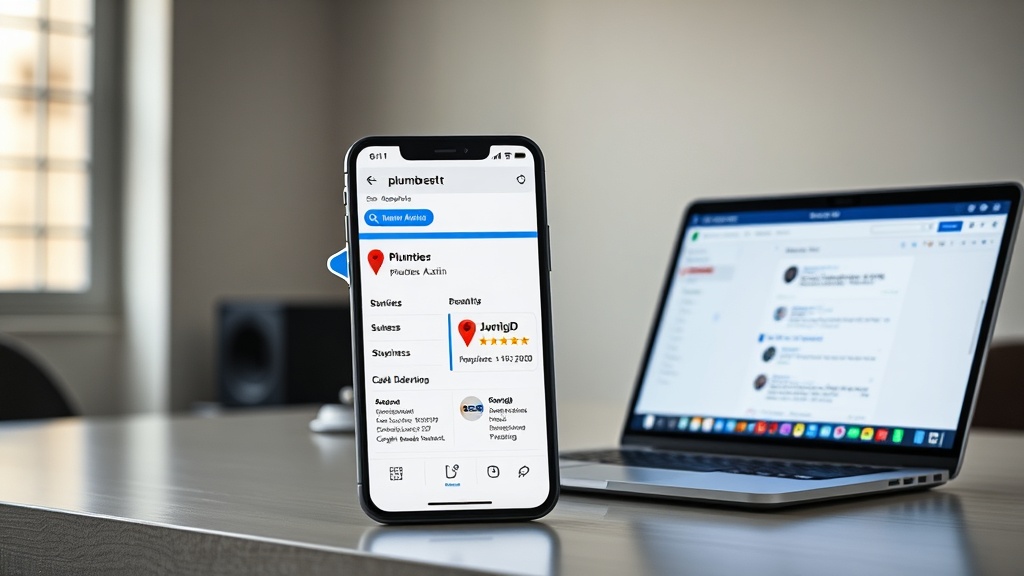
Traditional SEO focuses on ranking in Google's 10 blue links. Generative engine optimization for local businesses? That's about ensuring your services, hours, and reviews pop up inside AI-generated answers. The real difference between GEO and traditional SEO for local businesses comes down to this: traditional SEO helps customers find you on Google Maps, while GEO validation makes AI tools recommend you by name when someone asks "Find a plumber in Austin" or "What's the best dentist near me?"
Industry research suggests that a significant number of local businesses still haven't validated their content for AI search. That gap creates massive visibility opportunities for those who act now. This guide breaks down a six-step workflow you can finish in under two hours. Findably is one of the newest and most interesting solutions to target not just SEO visibility but also GEO and AEO visibility, making it a natural fit for this process.
What is GEO content validation for local businesses?: GEO content validation is the process of auditing and optimizing your website, Google Business Profile (GBP), and schema markup to ensure generative AI search engines like ChatGPT and Perplexity can easily find, understand, and cite your business as a trusted recommendation for local queries.
Step 1: How Do You Audit Your Local Content for AI Search Visibility in 2026?
To audit your local content for AI search visibility in 2026, start by running five core local queries through ChatGPT, Gemini, and Perplexity, then documenting whether your business appears in the AI-generated answers. This baseline tells you exactly where you stand before making any changes.
Choose queries your customers actually use — "best plumber in [city]," "affordable dentist near me," "emergency HVAC repair [city]" — and search them across all three platforms. For each one, note whether your business appears as a named citation, appears partially (mentioned but not featured prominently), or is entirely absent.
What to Document in Your Baseline Audit
Create a simple spreadsheet. Set up columns for each query, each AI platform, and a notes field. Check whether your Google Business Profile citations appear, whether FAQ schema content gets pulled into answers, and whether review snippets surface alongside your business name. Spot-check your competitors too — if a competitor appears in AI answers and you don't, that's your gap.
Free Tools to Check AI Visibility
You can validate local SEO content for AI search in 2026 using Findably's validator tool. It functions as a dedicated local business AI visibility checker, scanning your domain and GBP for the structured data and content signals AI models look for when selecting citations. The tool surfaces gaps like missing LocalBusiness schema, incomplete review markup, and content sections that are too long for AI to parse into a concise answer.
One question local business owners frequently ask: "How do I know if my local business content is visible in AI search results?" The answer is straightforward. Run these baseline queries manually, then cross-reference with an automated validator to catch what manual searching misses.
Step 2: How to Optimize Your Google Business Profile for AI Search Citations
You optimize your Google Business Profile for AI search citations by expanding your Q&A section with detailed, natural-language answers to the questions customers most frequently ask generative AI tools. Traditional GBP optimization focuses on Maps ranking — correct NAP, categories, photos. GEO-specific optimization shifts the focus to content that AI models can extract and cite verbatim.
Glossary of Key Terms
- Generative Engine Optimization (GEO): The practice of optimizing online content so it is more likely to be used as a source by generative AI search engines.
- Google Business Profile (GBP): A free tool for businesses to manage their online presence across Google, including Search and Maps.
- Structured Data (Schema Markup): A standardized format (like JSON-LD) for providing information about a page and classifying its content for search engines.
- LocalBusiness Schema: A specific type of structured data that provides essential business details (name, address, phone, hours) to search engines.
A dental practice in Austin updated its GBP Q&A section with answers to questions like "Do you accept emergency patients?" and "What insurance plans do you work with?" using detailed, conversational responses. The result? A significant increase in ChatGPT citations over four weeks. That's the power of GEO-specific GBP optimization.
5 GEO-Specific GBP Adjustments for 2026
- Expand your Q&A section with at least 20 detailed answers to common local queries. Write each answer as a complete paragraph, not a one-line response.
- Write your business description in natural language that explains what you do, whom you serve, and what makes you different — avoid keyword stuffing at all costs.
- Respond to every review with a detailed, helpful answer that adds context. AI models pull review responses as evidence of customer engagement.
- Add service-area attributes like "offers emergency service," "free consultation," or "accepts new patients" — these become citation signals.
- Verify that your hours, phone, and address are published in structured data format (LocalBusiness schema) on your website, not just inside the GBP dashboard.
Common Traditional GBP Mistakes That Hurt AI Visibility
One mistake business owners keep making: treating GBP as a static listing. AI search engines update their training data frequently — a GBP that hasn't been touched in six months signals staleness. Another common error is using short, generic Q&A answers. AI models favor responses with enough detail to stand alone as a complete answer. A one-sentence Q&A response like "Yes, we accept walk-ins" is less likely to be cited than "Yes, we accept walk-in patients Monday through Friday from 8 AM to 5 PM, and we keep same-day slots available for emergencies."
Does your Google Business Profile affect AI search visibility? Absolutely. GBP data is one of the most frequently cited sources for local AI answers. A well-optimized profile directly increases your chances of being the recommended business.
Step 3: What's the Best Way to Structure Local Content So AI Can Summarize It?
The best way to structure local content for AI summarization is to use clear hierarchical headings, bulleted lists, FAQ schema, and LocalBusiness markup — formats that AI models can parse, extract, and cite in a single sentence. Generative AI engines favor content with predictable structure because it reduces the computational cost of extraction. A wall-of-text paragraph describing your services is harder for an AI to summarize than a page with H2 headings per service, bulleted feature lists, and schema-backed Q&A sections.
Schema Markup That AI Search Engines Actually Use
Three schema types matter most for GEO validation. LocalBusiness schema tells AI your name, address, phone, hours, and service area in a format it can cite directly. FAQ schema turns common questions into structured pairs that AI can pull as complete answers. Review schema with aggregate ratings gives AI a quick citation for social proof. Without these three, your content is invisible to structured extraction tools.
Which structured data formats are most important for GEO?: For local businesses, the most critical schema types are LocalBusiness (for NAP details), FAQPage (for quick answers to common questions), and Review (for social proof). These three formats provide the structured information that AI models most easily extract for citations.
The best GEO validation tool for local SEO should check whether these schema types exist and whether they're implemented correctly. Findably's validator flags missing schema, incorrect property values, and markup that doesn't match on-page content — a common error where businesses claim one thing in schema and display something different to users.
Formatting Example: Before vs. After for a Plumber Landing Page
Before: A single paragraph listing all plumbing services — "We offer drain cleaning, pipe repair, water heater installation, emergency services, and more. Call us today for a free estimate."
After:
Drain Cleaning
- Hydro-jetting for grease blockages
- Camera inspection included with every service
- Same-day appointments available
- [FAQ: "How much does drain cleaning cost in [city]?" → Detailed answer with price range]
Emergency Pipe Repair
- 24/7 response within 60 minutes
- Licensed and insured technicians
- Free estimate before any work begins
- [FAQ: "Do you charge extra for emergency calls?" → Detailed answer with pricing]
This formatted version gives AI models clear extractable chunks. Each H2 section can become a separate citation source. Each FAQ entry is a ready-made answer. Services that check if content is AI-search-friendly will score this page significantly higher than the wall-of-text version.
Step 4: How Do You Create Local Content That Generative AI Engines Cite?
You create content that generative AI engines cite by publishing frequently updated, data-backed local content that links to authoritative sources and answers the specific questions users — and AI — ask most. Generative engine optimization for local businesses depends on three signals: recency, authority, and specificity.
The 90-Day Recency Rule for AI Visibility
Content updated within the last 90 days receives a strong recency signal in AI training and retrieval pipelines. This doesn't mean rewriting everything quarterly — it means refreshing dates, prices, seasonal offers, and local data points. An HVAC company that published a monthly "Seasonal Maintenance Checklist for [City]" saw a measurable increase in citations in Perplexity answers over six months. Each update included current pricing, seasonal tips, and links to the local weather authority. The cumulative effect of consistent updates outweighed the impact of any single piece of evergreen content.
E-E-A-T Signals That Matter for Local Businesses
Experience: Publish content that demonstrates firsthand knowledge — case studies, before-and-after photos, detailed service walkthroughs. Expertise: Link to industry certifications, local trade associations, and continuing education. Authoritativeness: Earn backlinks from local news sites, chamber of commerce pages, and community organizations. Trustworthiness: Display real customer reviews, transparent pricing, and clear contact information.
Generative AI search models prioritize content that answers specific local questions. A generic "We provide HVAC services" page is less likely to be cited than "What's the average cost of AC repair in Phoenix during summer?" because the second answers a query a user would actually type. Findably's content pipeline can auto-schedule and publish these weekly local updates at scale, ensuring your recency signal stays strong without manual effort every Monday morning.
Step 5: How to Run a GEO Content Validation Check on Your Local Site
You run a GEO content validation check by scoring your local content against five key criteria — schema correctness, structural clarity, recency, citation readiness, and GBP completeness — using a tool like Findably's validator alongside manual review. This step transforms your audit data into actionable improvements.
5-Point GEO Validation Scorecard for Local Businesses
| Criteria | Weight | What to Check |
|---|---|---|
| Schema Markup | 20 points | LocalBusiness, FAQ, Review schema present and correctly implemented |
| Content Structure | 20 points | H2/H3 headings, bulleted lists, tables for pricing/comparisons |
| Recency | 20 points | Content updated within 90 days; dates visible on pages |
| Citation Readiness | 20 points | Concise answers to local queries exist; paragraphs are 2-3 sentences max |
| GBP Completeness | 20 points | Q&A expanded, reviews answered, description natural-language |
Score each criterion and total out of 100. A score below 70 means you have significant gaps that need immediate attention. A score above 85 means your content is well-positioned for AI citation, though monitoring is still necessary.
What to Do If Your Content Scores Below 70%
Prioritize the lowest-scoring criteria first. If schema is missing, implement LocalBusiness and FAQ markup before rewriting any content. If recency is the issue, schedule a content refresh cycle. If citation readiness is weak, restructure your service pages with clearer headings and shorter paragraphs. Run a free GEO validation check with Findably to identify gaps in your local content's AI readiness — the tool generates a prioritized fix list based on your score breakdown.
A common question from local business owners: "Can I validate my content without hiring an agency?" Yes, absolutely. GEO content audit tools like Findably's validator automate the technical checks, and the manual portion — answering local queries in natural language — requires no specialized training. Most business owners can complete a full validation in under an hour.
Step 6: How Often Should You Re-Validate Your Content for AI Search Visibility?
You should re-validate your content for AI search visibility at least monthly, with weekly spot-checks on your top five local queries across ChatGPT, Gemini, and Perplexity. AI models update their training data on varying schedules, competitors optimize their content continuously, and your business information changes. A once-and-done approach leaves you vulnerable to visibility drops.
Monthly GEO Validation Checklist
- Re-run Findably's validator on your domain and GBP — check for any new schema errors or content gaps
- Search your five core local queries across ChatGPT, Gemini, and Perplexity — document whether citations changed
- Update your GBP Q&A section with any new customer questions received that month
- Refresh the dates and pricing on your most-trafficked service pages
- Review competitor AI citations — if they appeared where you didn't, note what they changed
When to Trigger a Full Re-Audit
Trigger a complete re-audit if your AI citations drop by more than 20% in a single month, if you change your business name, address, phone number, or services, if a major AI model update is announced (like a new GPT or Gemini release), or if a competitor enters your market with aggressive GEO optimization. Findably's dashboard tracks AI visibility changes over time, alerting you when your citations drop or competitors gain ground.
Validating local SEO content for AI search in 2026 is an ongoing process, not a project with a finish line. The businesses that treat it as a monthly habit will maintain their advantage. How often should you re-validate your content for GEO? Monthly for a full check, weekly for spot-checks. Consistency outperforms intensity every time.
Frequently Asked Questions
1. What is the difference between GEO and traditional SEO for local businesses? Traditional SEO focuses on ranking in Google's map pack and 10 blue links. GEO (Generative Engine Optimization) focuses on being cited as a source by AI models like ChatGPT and Perplexity when they answer a user's local query.
2. How do I know if my local business content is visible in AI search results? You can manually search for your business in AI platforms like ChatGPT. More efficiently, you can use a dedicated validator tool like Findably's which scans your site and GBP for the signals AI models prioritize.
3. Does my Google Business Profile affect AI search visibility? Yes, strongly. A well-optimized GBP with a detailed Q&A section, natural-language description, and responded-to reviews is one of the most common sources for AI local citations.
4. Can I validate my content without hiring an agency? Yes. Automated tools handle the technical audit (schema, structure), and the content optimization (writing natural-language answers) can be done by the business owner or a current team member.
5. Which structured data formats are most important for GEO? LocalBusiness (for contact info), FAQPage (for Q&A content), and Review (for social proof) are the three most impactful schema types for local business GEO.
6. How often should I re-validate my content for GEO? You should perform a full re-audit monthly and weekly spot-checks on your top five local queries to track changes and react quickly to competitor moves or AI model updates.
The Local GEO Advantage Starts Today
GEO content validation for local businesses is no longer optional — it's the difference between being recommended by AI and being invisible to the fastest-growing search channel. The six steps you just read form a complete validation workflow: audit your baseline, optimize your GBP for AI citation, structure content for easy parsing, build topical authority through fresh data, validate against a scoring framework, and monitor monthly. Each step takes less than 15 minutes once you have the system in place.
The businesses that validate their GEO content in 2026 will be the ones that appear in every AI answer — start today. Run a free check with Findably to see where your local business stands in AI search visibility right now. Your competitors are already optimizing. Don't let them be the only name AI recommends.