How to Get the Most Out of Your Findably Free Trial: A 7-Day Case Study

How to Get the Most Out of Your Findably Free Trial: A 7-Day Case Study
You’ve signed up for a free trial of an AI content platform. Now what? Do you tinker aimlessly, or run a strategic evaluation that delivers a clear, actionable verdict? For marketing teams, the stakes are high. It’s not just about finding a better AI writer; it’s about finding a complete content engine that can handle SEO, adapt to Generative Engine Optimization (GEO), and automate your entire pipeline.
This article walks through a real-world case study from a mid-sized B2B software company. We’ll detail their structured 7-day process using the Findably free trial, showing how they moved from setup to results analysis. You’ll get a proven framework for how to get the most out of a Findably free trial, including how to assess critical factors like AI content quality, workflow automation, and the platform’s unique dual focus on SEO and AI engine visibility.
What Was the Problem? The Need for a Smarter Content Engine
Our case study centers on a B2B SaaS company with a marketing team of five. Their pre-trial content workflow was a familiar patchwork of pain points: ideation in spreadsheets, writing in a general AI tool, manual SEO checks with a separate plugin, and publishing via a cumbersome CMS process. This disjointed system led to inconsistent output, missed deadlines, and a complete blind spot regarding how their content performed in AI engines like ChatGPT and Gemini—a growing source of traffic and leads.
Leadership had clear objectives for evaluating a new solution: significantly increase content output without sacrificing quality, deeply integrate SEO best practices, and, crucially, gain visibility into their GEO and AEO (Answer Engine Optimization) performance. They weren’t just looking for another writing assistant; they needed an integrated content engine. The Findably free trial was selected as the strategic tool to evaluate this complete pipeline approach, from keyword to published article with performance tracking.
Before You Start: Setting Your Trial Up for Success
A successful trial begins with preparation. The team knew that to answer “what is included in the Findably free trial?” they needed to map those features directly to their goals. This upfront work transformed their trial from a casual test drive into a focused evaluation.
What's in the Box? Trial Features and Limits
The Findably trial provides full access to the platform’s core workflow, designed to let you test the entire content pipeline. Key inclusions they planned to use were:
- AI Article Generations: Ample credits to produce several long-form pieces.
- Keyword Research & Intelligence Tools: To fuel their content strategy.
- GEO Visibility Tracker: Access to monitor article performance in AI engines.
- CMS Connector Credits: To test the auto-publishing feature to their WordPress sandbox site.
- Content Calendar & Scheduling: Full functionality for planning and automation.
Defining Your "Win" Criteria
Before logging in, the team defined specific, measurable success metrics. Their “win” criteria included:
- Produce and fully optimize three blog posts.
- Successfully test auto-publishing to their WordPress staging environment.
- Generate a comparative report on SEO rankings vs. GEO visibility for one target topic.
This clarity ensured every action during the trial had a purpose.
Days 1-2: How Do You Evaluate AI Content Quality with a Real Project?
With goals set, the team began the hands-on phase. The most critical test: how to evaluate AI content quality during a free trial. They selected a real, upcoming blog topic—a moderately complex guide comparing different software integration approaches—as their test case. Using a real project ensured the evaluation would reflect actual use-case pressures.
They started in Findably by building a detailed content brief, inputting target keywords, desired tone, and key points to cover. The generation process was straightforward, but the real evaluation began with the first draft.
How to properly assess AI-generated content quality: To evaluate quality effectively, move beyond readability and implement a structured checklist. Industry best practices suggest assessing tone match, factual integrity (E-E-A-T), SEO structure, and human flow. This method ensures the content meets both brand and search engine standards.
The Quality Assessment Checklist
The team used a rigorous, four-point checklist to assess the output, moving beyond simple “does it sound good?” to strategic evaluation:
- Tone & Brand Voice Match: Did the content maintain their professional yet approachable B2B voice, or did it sound generic? They tested Findably’s humanization and brand voice controls extensively.
- Factual Integrity & E-E-A-T Signals: Was the information accurate? Did it properly cite features and use cases? They looked for signs of expertise, authoritativeness, and trustworthiness in the structure. According to Google's Search Quality Rater Guidelines, E-E-A-T is a critical factor for high-quality content.
- SEO Structure: Were headings (H2s, H3s) used logically? Was keyword integration natural and comprehensive, not stuffed?
- Readability & “Human” Flow: Did the article guide the reader with smooth transitions, or did it feel like a concatenation of facts? They assessed paragraph length, sentence variety, and narrative cohesion.
By the end of Day 2, they had a polished draft that passed their internal quality bar, confirming the AI could handle complex topics with the right guidance.
Days 3-4: Testing Optimization, Scheduling, and Automation
Satisfied with the creation engine, the team shifted focus to the efficiency and automation that defines a true content pipeline. This phase tested the promise of moving from a creation tool to an operational system.
They used Findably’s built-in SEO optimization features to run a final check on their article, receiving actionable suggestions for semantic keywords and content depth. Next, they scheduled the article in the platform’s content calendar, testing the reminder and approval workflow notifications that would keep a team on track.
How to test content automation in a free trial: The key is to validate the complete workflow from optimization to publishing. Use the trial's automation features—like SEO optimization, scheduling, and CMS connectors—on a real article. A successful test of auto-publishing to a sandbox environment demonstrates tangible time savings and operational scalability for teams.
The most significant test was auto-publishing to CMS. They connected Findably to a sandbox WordPress site. The process involved mapping their custom fields and post format. With one click, the fully formatted article—complete with featured image, meta description, and categories—was published to their sandbox. This successful test represented a potential saving of 15–20 minutes of manual work per article, a massive efficiency gain at scale.
Days 5-7: What Results Did They See? Measuring SEO vs. GEO Visibility
The final phase was analysis. The team published their test article to a live but low-traffic section of their site and began monitoring. Findably’s analytics provided a dual lens, which became the most revealing part of the trial.
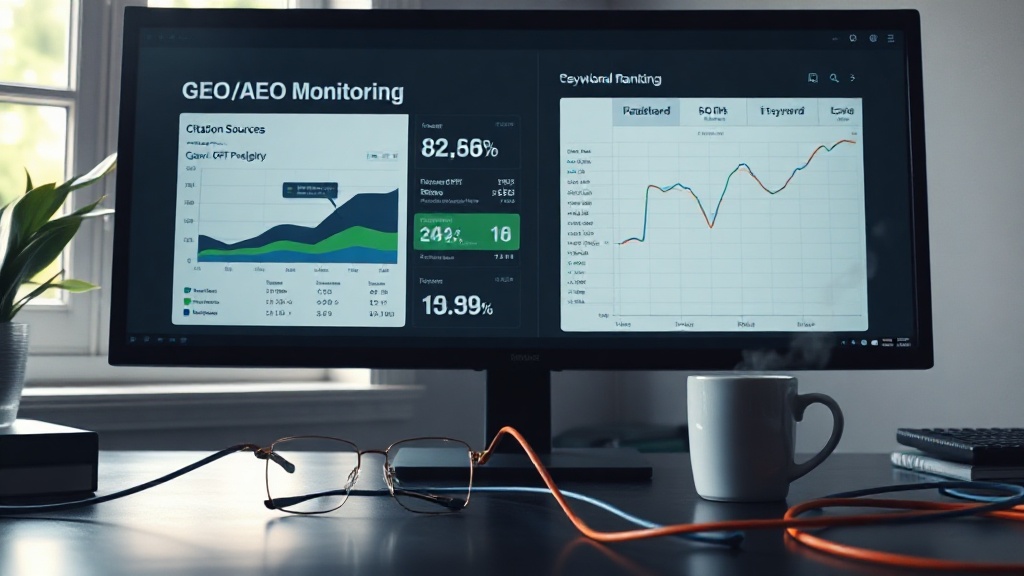
They tracked traditional SEO keyword ranking movement for their target terms, seeing initial indexing and minor ranking improvements within the first 48 hours. More uniquely, they activated the GEO visibility tracking for the same article. This dashboard showed them how often their content was cited or referenced in responses from AI engines like ChatGPT and Microsoft Copilot for related queries.
What results can you measure in a 7-day free trial? In a short trial, focus on process validation and early indicators. You can confirm content quality, successful automation, and initial visibility. Crucially, you can compare traditional SEO indexing against GEO (Generative Engine Optimization) visibility in AI answer engines, which often provides faster initial feedback than standard search rankings.
Comparing these datasets offered a new insight: while traditional SEO movement was slow, they saw GEO “impressions” almost immediately. This highlighted how content could generate visibility in AI-powered answer engines long before it climbed to page one of Google—a critical insight for modern content strategy that most platforms ignore.
Findably vs. The Alternatives: What Your Trial Reveals
The team’s experience naturally led to a competitive analysis, a key step for any evaluator. A common search is for a Findably free trial vs Jasper free trial comparison. Their hands-on testing revealed fundamental differences in platform philosophy.
Key Differentiators Uncovered
- Integrated Pipeline vs. Point Solutions: Findably provided a unified workflow from research to publishing. In contrast, tools like Jasper excel as writing assistants but require stitching together other tools for SEO (like Surfer SEO or Clearscope) and publishing, creating workflow friction.
- Native GEO/AEO Tracking vs. SEO-Only Analytics: Unlike standalone SEO platforms (e.g., Frase, Outrank) that focus solely on search engines, Findably bakes AI engine visibility tracking directly into its analytics, a forward-looking feature for the generative web.
- Workflow Automation for Teams: Findably’s calendar, scheduling, and auto-publishing are built for team collaboration and scaling output. Many alternatives remain focused onindividual contributor workflows, lacking the operational layer.
How does Findably compare to other AI content platforms? Findably distinguishes itself as an integrated content pipeline, combining AI writing, SEO, and GEO analytics into a single workflow. This contrasts with point solutions that excel at writing but require third-party tools for optimization and lack native tracking for AI engine visibility, which is critical for modern content strategy.
Next Steps: Is Findably Right for Your Team?
The case study provides a blueprint, but the final decision is yours. To determine how to get the most out of a Findably free trial, use your experience to answer this decision-making checklist:
- Did the AI content meet your quality and brand voice standards?
- Did the automation (scheduling, auto-publish) demonstrate tangible time savings?
- Did the dual SEO/GEO analytics provide valuable, unique insights?
- Did the integrated workflow feel more efficient than your current patchwork of tools?
If you answered "yes" to most, Findably likely aligns with your need for a comprehensive content engine.
Special Considerations for Agencies
For agencies evaluating an SEO content platform free trial for agencies, the platform's scalability and multi-client features are paramount. During your trial, pay special attention to client management dashboards, white-label reporting capabilities, and the ability to maintain distinct brand voices and workflows across different accounts. These features are what transform a content tool into a scalable servicedelivery engine.
Conclusion: A Framework for Strategic Evaluation
The 7-day case study demonstrates that a free trial is more than a feature tour; it's a strategic audit of a potential content partner. By following a structured process—setting clear goals, testing quality on a real project, validating automation, and measuring dual-faceted results—you can move beyond superficial impressions to a data-backed decision. The key takeaway is that the true value of a platform like Findably lies not in any single feature, but in its integrated approach to the modern content lifecycle, where SEO and GEO are two sides of the same visibility coin. Use your trial to test that integration under your own conditions, and you'll know precisely if it's the engine your content strategy needs.